Kid Collection: A Thoughtful Design System for Playful, Purposeful Creativity
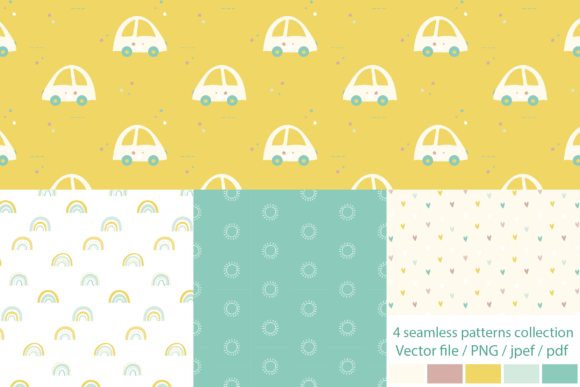
Designing for children demands more than visual appeal—it requires intentionality, emotional resonance, and functional flexibility. The Kid Collection emerges not as a decorative add-on, but as a cohesive design system grounded in developmental awareness and aesthetic clarity. At its core lies a philosophy that simplicity isn’t reduction—it’s refinement. A cute mini collection is designed for kids, yes—but its minimalistic elements—rainbows, stars, cars, suns—are carefully curated to evoke calm, curiosity, and gentle joy without sensory overload. These aren’t random motifs; they’re archetypal symbols recognized across cultures and age groups, rendered with clean lines, balanced spacing, and harmonious color palettes that support focus and rest alike.
Why Minimalism Matters in Children’s Visual Environments
Research in environmental psychology and early childhood education consistently highlights how visual clutter impacts attention regulation, emotional regulation, and learning retention—especially in young children whose executive function skills are still maturing. Overly busy patterns can unintentionally compete for cognitive resources, while thoughtfully restrained designs like those in the Kid Collection offer scaffolding: familiar shapes act as visual anchors, soft gradients support spatial orientation, and consistent scale relationships build predictability. A rainbow here isn’t a chaotic burst of color—it’s three soft arcs, evenly spaced, using muted coral, sky blue, and buttery yellow. A star isn’t sharp or glittering—it’s a five-pointed silhouette with gentle rounded corners and subtle inner shadowing. This restraint isn’t stylistic preference alone; it’s evidence-informed design practice.
Seamless Integration Across Physical and Digital Mediums
The Kid Collection bridges disciplines by delivering assets engineered for real-world application—not just theoretical versatility. Its 20 included files fall into four interlocking categories, each serving distinct production needs:
- Vector source files (.ai): Four editable Illustrator files provide full scalability and customization. Designers can adjust stroke weights, recolor individual elements, or isolate components for custom layouts—ideal for educators adapting materials for diverse learners or small businesses branding reusable classroom supplies.
- PNG seamless tiles: Four transparent-background tiles optimized for repeat tiling. These work flawlessly in digital scrapbooking software, fabric design platforms (like Spoonflower), or web-based tools where pattern continuity matters—think wall decals, reusable lunchbox liners, or interactive whiteboard backgrounds.
- JPEG seamless tiles: Same tiling logic as the PNGs, but with flattened transparency—critical for print-on-demand services that don’t accept alpha channels or for embedding directly into PDF lesson plans without layer complications.
- PNG digital paper (A4): Four ready-to-print A4 sheets, each featuring a single, centered motif on a light background with subtle texture overlay. These serve double duty: as printable activity sheets (e.g., tracing stars, coloring suns) or as high-resolution scan-ready textures for hybrid analog-digital workflows—common among illustrators, Montessori material developers, and occupational therapists designing fine-motor kits.
This structure reflects how creators actually work—not in silos, but across iterative cycles of sketching, prototyping, testing, and refining. A kindergarten teacher might start with a PNG digital paper to print laminated emotion cards, then use the vector file to adapt one star motif into a custom sticker for behavior charts. A stationery entrepreneur may combine the car tile with a custom font to create themed notepads, then repurpose the same tile as a repeating background for email newsletter headers. The collection doesn’t assume your workflow—it supports multiple entry points.
Real-World Applications Beyond Aesthetics
While often associated with “cute” surfaces, the Kid Collection demonstrates functional depth when applied contextually:
Educational Resource Development
Early literacy programs benefit from consistent iconography. A sun motif, repeated across flashcards, phonics posters, and reward tokens, becomes a visual cue for “sound it out” or “take a breath”—leveraging pattern recognition to reinforce routines. Similarly, the car element functions as a neutral vehicle (pun intended) for sequencing activities: “What comes first—the red car, the blue car, or the yellow car?”—supporting ordinal thinking without gendered or culturally loaded associations.
Inclusive Environmental Design
For neurodiverse learners—including children with ADHD, autism, or sensory processing differences—the predictability of minimalistic patterns reduces cognitive load during transitions. A hallway lined with wallpaper using the rainbow tile creates visual rhythm without distraction, helping students anticipate movement between spaces. Occupational therapists report improved engagement when therapeutic tools (e.g., weighted lap pads, fidget sleeves) feature these motifs: the familiarity lowers resistance, while the simplicity avoids overstimulation.
Sustainable Product Creation
Small-batch makers increasingly prioritize longevity over trend-chasing. Because the Kid Collection avoids hyper-specific cultural references or dated slang, products made with these assets remain relevant across seasons and demographics. A tote bag printed with the star tile looks equally appropriate for a toddler’s first day of preschool, a homeschool co-op supply kit, or a pediatric clinic’s patient welcome packet—extending product life cycles and reducing waste.
Considerations for Ethical and Effective Use
Even well-intentioned design carries responsibility. When deploying the Kid Collection, thoughtful practitioners consider:
- Color contrast and accessibility: While the palette leans gentle, users should verify contrast ratios (e.g., using WebAIM’s Contrast Checker) when applying motifs to text-heavy materials or digital interfaces—especially for children with low vision or color perception differences.
- Cultural resonance vs. appropriation: Rainbows and stars appear globally, but their meanings vary. In some Indigenous traditions, rainbows signify spiritual bridges; in others, stars denote ancestral guidance. Using them as neutral decorative elements is acceptable—but adding narrative context (e.g., in storybooks or lesson plans) warrants consultation with cultural advisors.
- Scale appropriateness: The car motif, for instance, reads clearly at 2 cm tall on a sticker but dissolves into abstraction at 2 mm on embroidery thread. Users should test physical outputs at final size—particularly for tactile materials used by infants or toddlers exploring orally.
- Developmental alignment: A 2-year-old responds differently to a sun than a 6-year-old. Younger children benefit from isolated, high-contrast motifs; older children engage more deeply with subtle variations—like a sun with rays of graduated length, inviting counting or measurement exploration.
Workflow Flexibility for Diverse Practitioners
No two users approach the Kid Collection identically—and that’s by design. Consider how three professionals integrate it differently:
- A freelance illustrator imports the .ai files into Adobe Fresco, uses the vector stars as base layers, then hand-traces over them with textured brushes to create bespoke illustrations for a bilingual picture book—preserving structural consistency while adding organic warmth.
- A curriculum designer for a public school district combines the JPEG seamless tiles with Canva’s brand kit to generate standardized slide templates. Every math worksheet header features the same sun tile, creating subconscious continuity across grade levels—reinforcing institutional identity without sacrificing child-centered aesthetics.
- A textile artist launching a line of organic cotton baby wraps uploads the PNG seamless tiles to a digital loom interface, adjusts repeat density to match weave tension, then pairs the resulting fabric with undyed cotton trim—letting the quiet joy of the motifs speak without competing embellishment.
Each path honors the collection’s foundational values: peace through restraint, brightness through clarity, and purpose through usability. There’s no prescribed “right way”—only context-aware choices that align with professional ethics, audience needs, and material constraints.
Looking Ahead: Design That Grows With Its Users
The enduring value of the Kid Collection lies in its capacity to evolve—not through feature bloat, but through layered interpretation. A child who first identifies the car shape on a flashcard may later study its symmetry in a geometry unit. An educator who begins with A4 digital papers may progress to modifying vector files for custom manipulatives. A researcher studying visual cognition in early childhood might use the consistent motif set as a controlled variable across experimental stimuli. This scalability isn’t accidental; it’s embedded in the minimalism itself. When forms are distilled to their essential qualities, they become vessels—not for fixed meaning, but for expanding understanding.
In a landscape saturated with loud, fast, and fleeting visuals, the Kid Collection offers something quieter but more resilient: design that invites participation rather than passive consumption, supports growth without prescribing it, and remains useful long after the initial “cuteness” fades. It reminds us that the most powerful tools for nurturing young minds aren’t always complex—they’re clear, consistent, and deeply considered.